
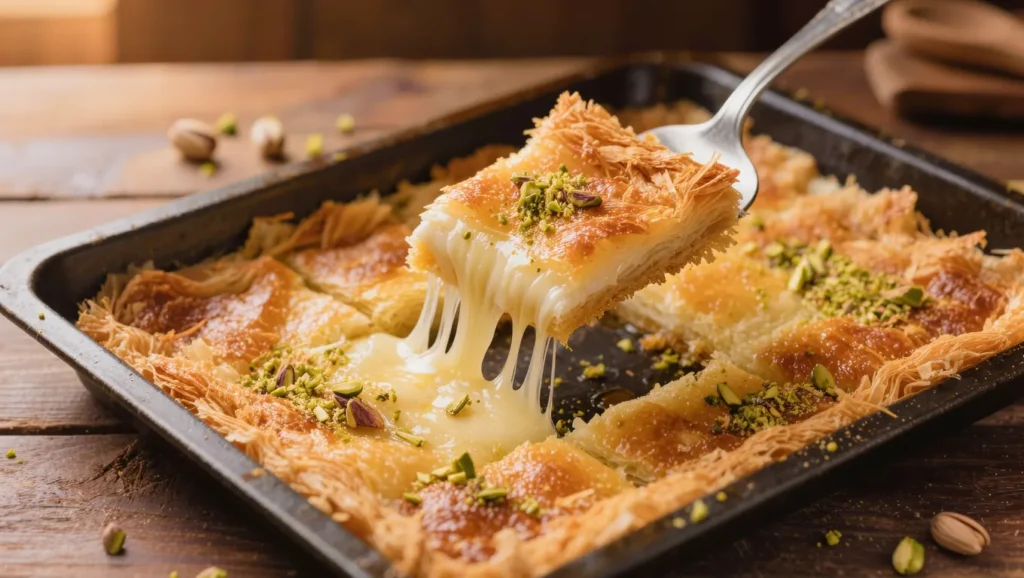
Kunafa is simple on paper: shredded kataifi dough, butter, cheese and syrup. Yet home bakers and small kitchens in Mumbai and Thane often end up with a tray that is soggy in the middle or hard and dry at the edges. In almost every case the cause is one of a few small mistakes, and each has an easy fix. This guide walks through them in the order they usually happen.
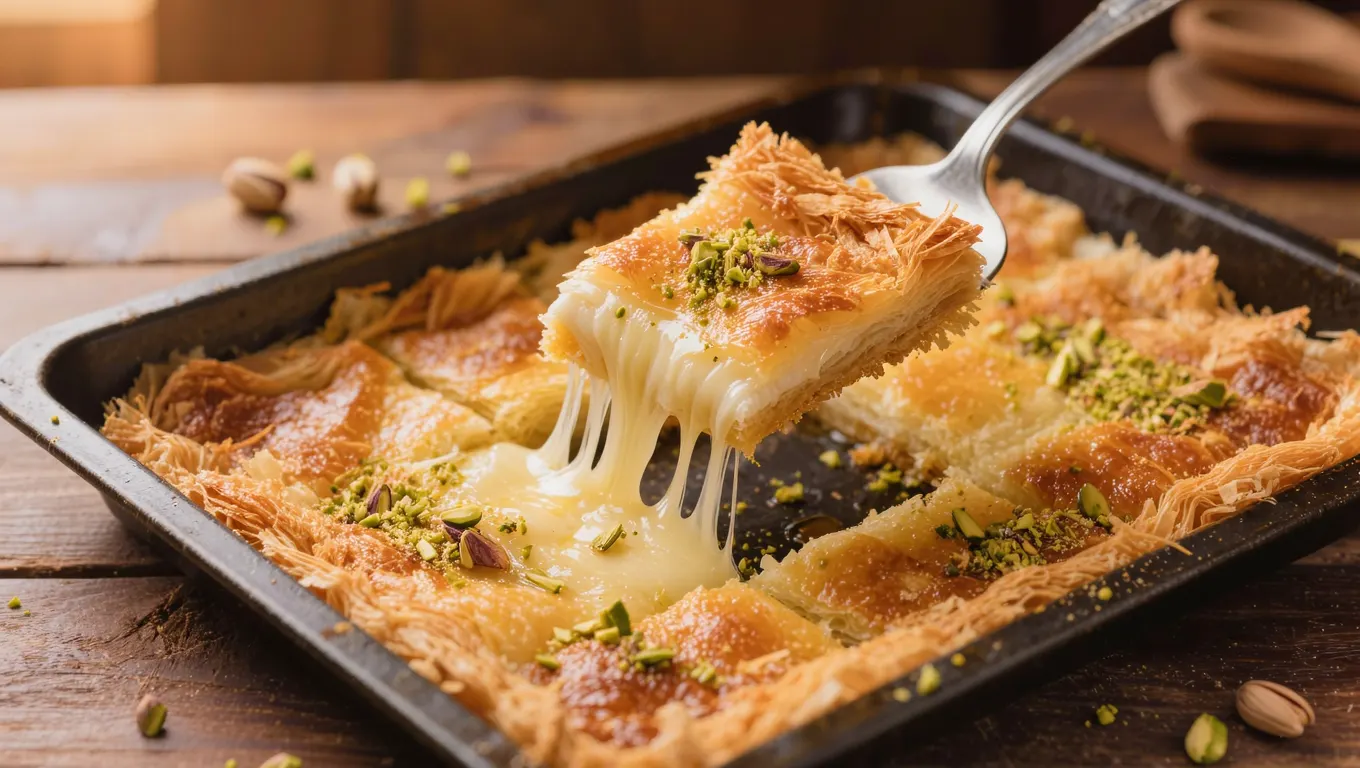
Why kunafa turns soggy
Sogginess means water is getting trapped in the pastry. These are the usual causes.
- Syrup and kunafa are both hot. Pouring hot syrup over hot kunafa makes the strands soak it up and go limp. Use the simple rule of one hot, one cool. Cool syrup over freshly baked kunafa is the most common choice.
- Too much syrup. The syrup should sweeten the kunafa, not fill the tray. Add a little, wait a minute, then add more only if needed. Serving extra syrup on the side lets everyone choose.
- Wet cheese. Brined cheeses such as Nabulsi need to be soaked and drained, and fresh mozzarella can hold a lot of water. Pat the cheese dry before it goes into the tray.
- Not enough butter on the strands. Butter or ghee coats each strand and helps it crisp in the oven. Strands with too little fat steam instead of crisping.
- Covering the tray while it cools. A lid or foil traps steam and softens the top. Let the tray cool uncovered.
Why kunafa turns hard or dry
- The dough dried out before you used it. Kataifi strands dry quickly when left uncovered on the counter. Keep the pack closed and take out only what you need. Our guide on how to store kataifi dough explains how to keep it soft and easy to separate.
- Pressing the dough too hard. Packing the base too tightly makes a dense, hard layer. Press firmly enough to hold the shape, not so hard that the strands fuse.
- Overbaking. Golden is the goal. Dark brown strands taste bitter and feel brittle.
- Old or poorly stored dough. If the dough smells off or breaks into dry dust, no technique will rescue it. Read how to check kataifi dough quality before you buy or use a new batch.
A simple routine that avoids both problems
- Pull the strands apart by hand so they are loose and fluffy, not clumped.
- Toss them with melted butter or ghee until every strand is coated.
- Press half into the tray, add dry, drained cheese, then cover with the rest.
- Bake until deep golden. Ovens vary, so watch the colour more than the clock.
- Pour cool syrup over the hot tray in small amounts.
- Let it rest uncovered for a few minutes, then serve warm.
If you are unsure how much dough your tray needs, see how much kataifi dough per kunafa tray. For a full walkthrough from the first step, use our kunafa recipe guide using kataifi dough.
Fixing kunafa that has already gone soft
If a baked tray has softened, a few minutes in a hot oven or an air fryer brings back some crunch. Do not use a microwave, because it adds steam. If you serve kunafa from a kitchen and it travels to the customer, our tips on how to keep kunafa crisp after delivery go into more detail.
Frequently asked questions
Why is my kunafa soggy at the bottom?
Usually because wet cheese, too much syrup, or syrup poured while the tray was still very hot has left water in the base. Drain the cheese well and use cool syrup on hot kunafa.
Why is my kunafa hard and dry?
The strands were probably dry before baking, packed too tightly, or overbaked. Keep the dough covered until use, coat it well with butter and bake only until golden.
Should the syrup be hot or cold?
Use one hot and one cool. Most home cooks pour cool syrup over kunafa fresh from the oven.
How much butter should I use on kataifi dough?
Enough to coat every strand lightly and evenly. The strands should look glossy but not pooled in fat.
Where can I buy kataifi dough in Mumbai and Thane?
Sufy’s Kanafeh Point makes kataifi dough in Umerkhadi, Mumbai. Kitchens in Thane can see the kunafa dough supplier page for Thane, and anyone outside Mumbai can read about buying kataifi dough online in India.
Next step
New to the dough itself? Start with what kataifi dough is, then try the routine above on a small tray first.