
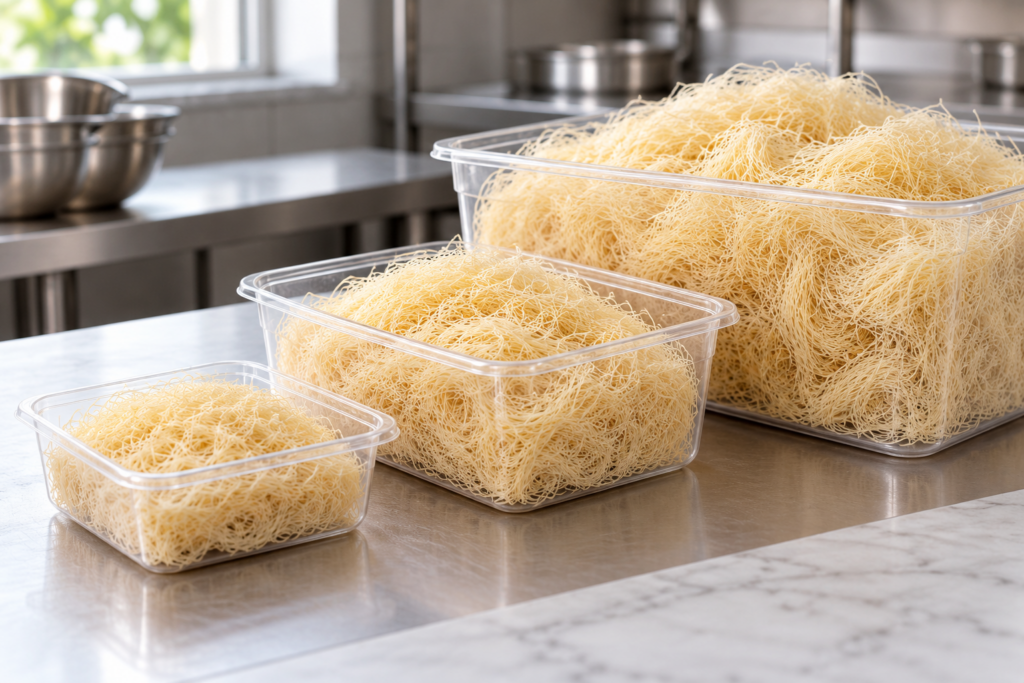
Fresh vs Frozen Kataifi Dough: What Should a Commercial Kitchen Buy?
Restaurants, bakeries, cloud kitchens and caterers need kataifi dough that is easy to plan, store and use consistently. One of the first questions a buyer may ask is whether fresh or frozen kataifi dough is the better choice.
There is no single answer for every business. The right option depends on your production schedule, storage space, delivery frequency and the way your team handles the fine pastry strands. This guide explains the practical differences so you can discuss the right supply plan with your kataifi dough supplier.
What is fresh kataifi dough?
Fresh kataifi dough is supplied for use within the storage period advised by the manufacturer. It can suit kitchens that prepare kataifi-based products regularly and can plan their orders around a dependable delivery schedule.
The main advantage is simple workflow. When the dough arrives in a suitable condition and is handled correctly, the kitchen can portion it for current production without building a large frozen stock. Fresh supply may work well for restaurants and bakeries with steady weekly demand.
However, the team must still protect the strands from air and unwanted moisture. Always follow the instructions supplied with the pack and read our guide on how to store kataifi dough before placing a repeat order.
What is frozen kataifi dough?
Frozen kataifi dough is stored at a controlled low temperature and thawed before use. It can give a commercial kitchen more flexibility when production changes from week to week or when deliveries are less frequent.
The important factor is thawing and handling. A pack should not be opened too early, left exposed or repeatedly moved between temperatures. Poor thawing can make fine strands difficult to separate. The supplier’s instructions should always take priority because the correct process can vary by product and pack format.
Fresh vs frozen kataifi dough: quick comparison
- Production planning: Fresh dough may suit steady, frequent production. Frozen stock can support a less predictable production calendar.
- Storage: Fresh supply needs suitable chilled storage. Frozen supply needs reliable freezer space and a planned thawing routine.
- Ordering: Fresh dough may be ordered more frequently. Frozen dough may allow a kitchen to hold stock for planned future batches.
- Handling: Both options need careful protection of the fine strands. Frozen dough also needs controlled thawing.
- Waste control: The best option is the one that matches your actual usage, not simply the largest pack or the lowest price per kilogram.
Choose according to your weekly production
Start with the number of trays or portions your kitchen produces in a normal week. Then compare that figure with the quantity used during busy days, events and seasonal demand. A restaurant with a stable menu may choose a different supply plan from a caterer that handles large but irregular orders.
If you are still measuring usage, our guide to kataifi dough per kunafa tray can help you build a basic costing and ordering estimate. Test the dough in your own recipe because tray size, layer thickness and menu style can change the required quantity.
Do not order more than your team can handle
A bulk price is useful only when the kitchen can store and use the product correctly. Before ordering, confirm the available refrigerator or freezer space, the number of packs used per service and who is responsible for opening, portioning and protecting unused dough.
For a clearer quotation, review the current factors that influence kataifi dough price in Mumbai. Quantity, pack size, delivery area and order schedule may all affect the final commercial quote.
Questions to ask before buying
Use this checklist when comparing supply options:
- Is the dough supplied fresh, chilled or frozen?
- What is the recommended storage temperature?
- How should a frozen pack be thawed?
- How long can the pack remain open during production?
- Which pack sizes are available for business orders?
- What is the minimum order quantity?
- Can delivery be planned weekly or according to production?
You can also use our detailed kataifi dough supplier checklist when speaking with a manufacturer or wholesale supplier.
Which option is better for restaurants and bakeries?
Fresh kataifi dough may be a practical choice when your kitchen has regular demand, frequent deliveries and a clear production plan. Frozen kataifi dough may be useful when demand changes, storage time is important or deliveries need to be less frequent.
The safest decision is based on your real workflow. Ask for current product details, test a suitable quantity and record how the strands perform in your kitchen. This is more useful than choosing only by price or assuming that one format is always better.
Order kataifi dough for your business
Sufy’s Kanafeh Point supplies kataifi dough for business requirements in Mumbai, Thane and Navi Mumbai, subject to current availability, order quantity and delivery planning. Visit the wholesale kataifi dough supplier page or the dedicated kataifi dough for restaurants page to discuss pack size, supply schedule and a current quote.
Need help choosing a supply plan? Contact Sufy’s with your location, expected weekly usage and preferred delivery schedule. The team can explain the currently available format and help you plan a suitable business order.