
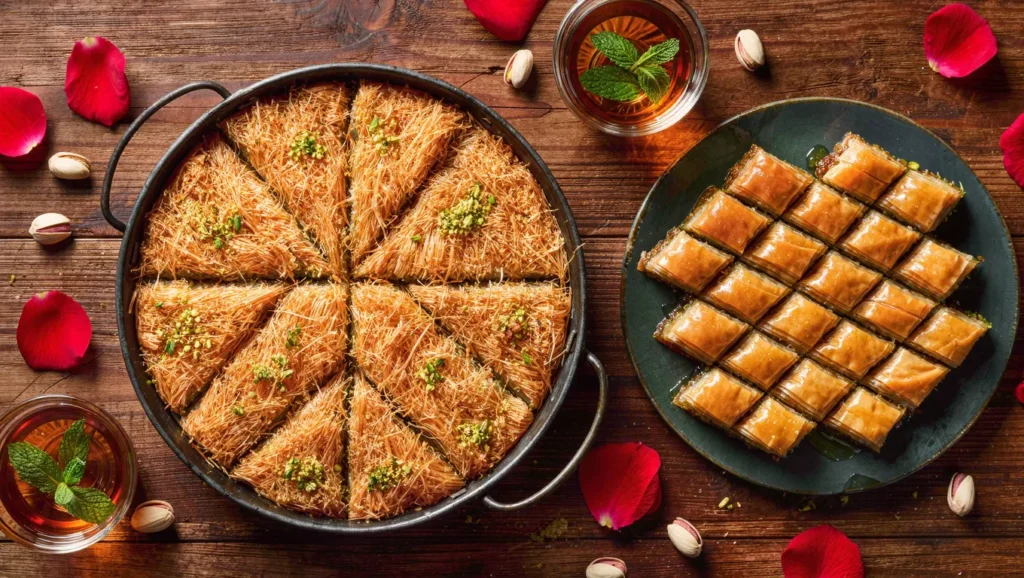
If you have been searching for Middle Eastern desserts in Mumbai or Thane, the list can feel confusing: kunafa, kanafeh, baklava, basbousa, umm ali, maamoul. This guide explains what each dessert actually is, what to look for when you try it, and which ones are easiest to enjoy at home. It also covers how to judge the best kunafa in Mumbai by taste and texture, since quality matters more than the name on the menu.
Kunafa (kanafeh): the dessert to try first
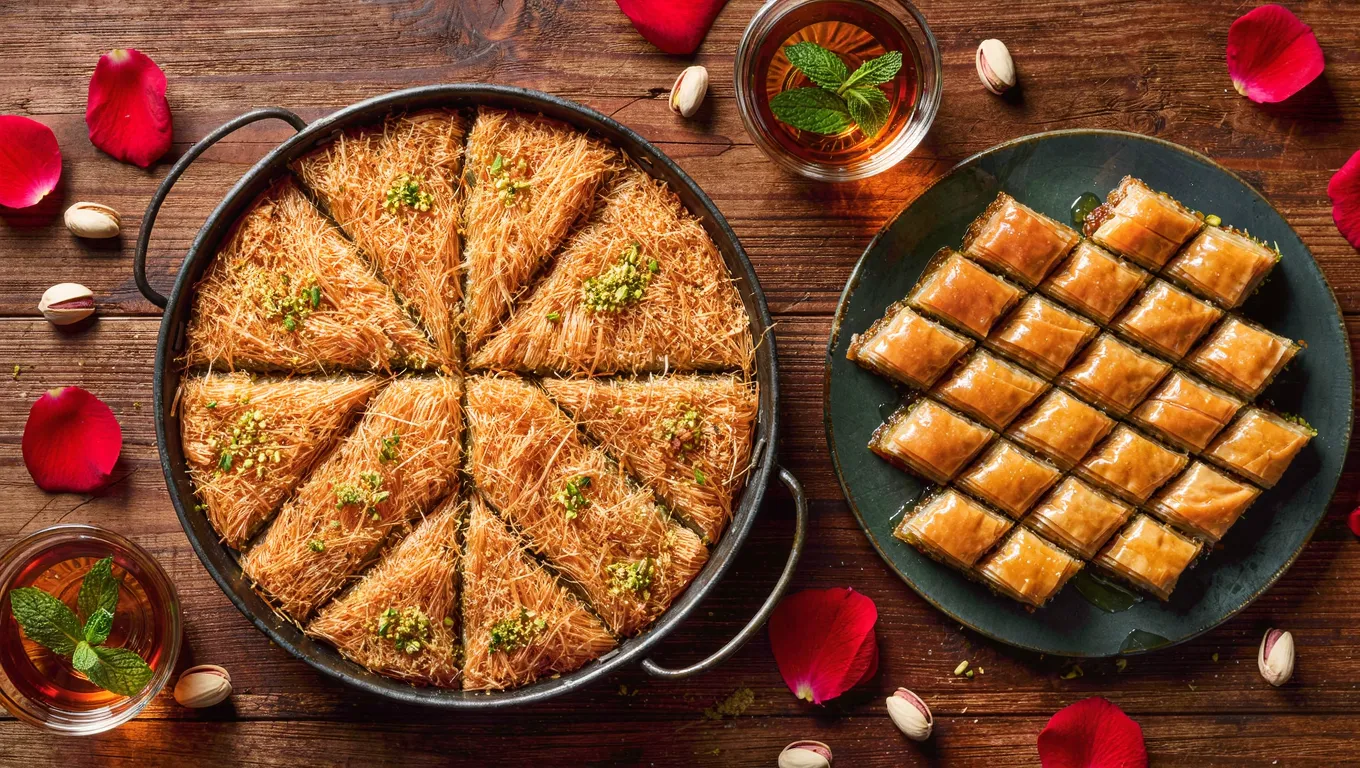
Kunafa, also spelled kanafeh or knafeh, is a warm dessert from the Levant. A base of thin pastry is layered with cheese or cream, baked or pan-fried until golden, then soaked in sugar syrup and topped with crushed pistachios. The pastry is either shredded strands, called kataifi or kadayif, or a fine semolina crumb. The shredded version gives the crunch most people associate with kunafa.
What to look for when you try it in Mumbai or Thane:
- Crisp pastry, not soggy. The strands should crunch, not collapse into the syrup.
- Warm, stretchy cheese. Good kunafa is served warm so the cheese pulls. Cold kunafa loses most of its appeal.
- Balanced syrup. It should sweeten the dessert, not drown it. Asking for extra syrup on the side is a sensible habit.
If you are curious how the pastry itself works, our guide to what kataifi dough is explains it in plain language, and the article on the difference between kataifi, kadayif and kunafa dough clears up the naming.
Baklava: layered, nutty and made to last
Baklava is built from many thin sheets of phyllo pastry layered with chopped nuts, usually pistachio or walnut, and finished with syrup or honey. It is cut into diamonds or squares. Turkish, Lebanese and Greek versions differ in the nuts, the syrup and how thin the layers are. Unlike kunafa, baklava keeps well at room temperature for days, which is why it is the usual choice for gifting and sharing.
A good piece should be crisp at the edges, moist but not wet in the middle, and clearly taste of the nut it is named for. If you are deciding between the two, the guide to kunafa vs baklava sets out the differences side by side.
Other Middle Eastern and Arabic sweets worth knowing
If you enjoy kunafa and baklava, these are the next ones to try when you see them on a menu or in an Arabic sweets shop in Thane or Mumbai:
- Basbousa: a soft semolina cake soaked in syrup, often with coconut or almonds on top.
- Umm Ali: an Egyptian warm dessert of baked pastry or bread with milk, cream and nuts. Comforting and best eaten fresh from the oven.
- Maamoul: a shortbread-style cookie filled with dates, pistachios or walnuts, traditionally made for festivals.
- Esh el bulbul (bird’s nest): a baklava variation where a nest of shredded kataifi pastry is filled with nuts and soaked in syrup.
- Tulumba: a Turkish fried dough dessert soaked in syrup, similar in spirit to churros.
How to choose the best kunafa and baklava in Mumbai and Thane
Instead of chasing a single “best” name, use a short checklist. These points apply whether you are visiting a sweet shop, ordering from a cafe or comparing options online:
- Ask when the dessert was made. Kunafa is at its best the same day.
- Check the cheese. It should melt and stretch, not turn rubbery.
- Look at the nuts. Real pistachio has a distinct green colour and flavour.
- Taste before you buy in bulk. Sweetness levels differ a lot between makers.
- For parties and gifting, ask what holds up better. Baklava usually travels and keeps better than kunafa.
Making kunafa at home with kataifi dough
You can also make kunafa at home. The shredded pastry is the key ingredient, and it is sold as kataifi dough. Sufy’s Kanafeh Point makes kataifi dough in Umerkhadi, Mumbai, for home bakers, restaurants and cloud kitchens across Mumbai and Thane. If you want to try it yourself, start with the kunafa recipe guide using kataifi dough, work out quantities with how much kataifi dough per kunafa tray, and read how to store kataifi dough so it stays fresh.
Businesses in Thane can see the kunafa dough supplier page for Thane, and anyone comparing options in Mumbai can check kataifi dough price in Mumbai and the wholesale kataifi dough supplier page.
Frequently asked questions
What are the best Middle Eastern desserts to try in Mumbai and Thane?
Start with kunafa (kanafeh) and baklava, then try basbousa, umm ali, maamoul and tulumba. Kunafa is the one to eat warm and fresh; baklava is the one that keeps and gifts well.
What is the difference between kunafa and kanafeh?
They are the same dessert. Kunafa, kanafeh and knafeh are different spellings of the Arabic name.
Is baklava the same as kunafa?
No. Baklava uses layered phyllo sheets with nuts, while kunafa uses shredded kataifi pastry or semolina, usually with cheese or cream, and is served warm.
What are Arabic sweets in Thane usually made of?
Most Arabic sweets use a few core ingredients: semolina, phyllo or kataifi pastry, nuts such as pistachio, dates, cheese or cream, and sugar syrup, sometimes scented with rose or orange blossom water.
Can I make kunafa at home?
Yes. With kataifi dough, cheese, butter and sugar syrup, kunafa is straightforward to bake at home. Our recipe guide walks through each step.
Where to go next
Whether you are tasting Middle Eastern desserts in Mumbai and Thane or baking your own, understanding the ingredients makes every choice easier. Explore the complete kataifi dough guide to get started.