
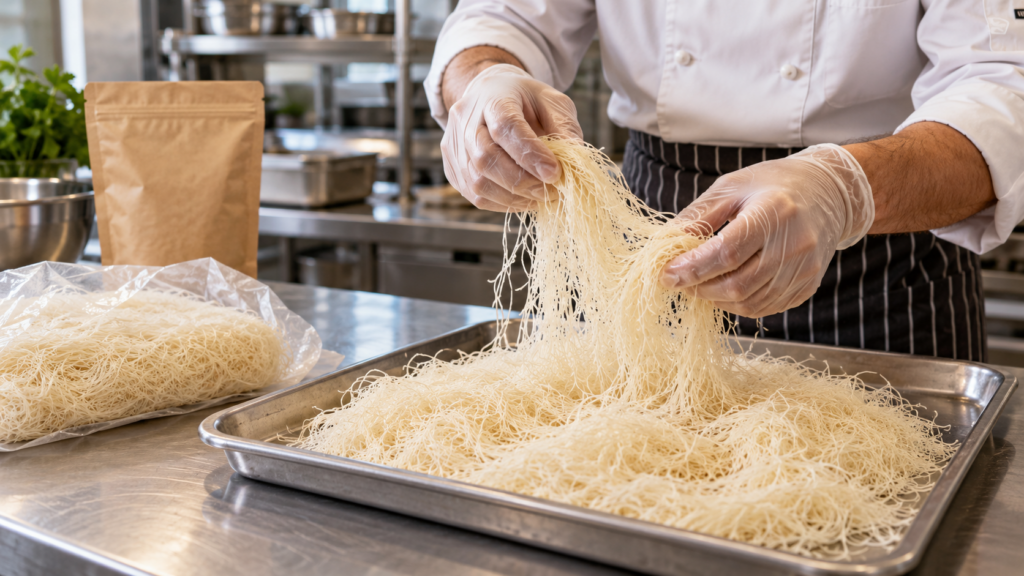
Frozen kataifi dough is convenient for restaurants, bakeries, hotels and cloud kitchens, but the thawing process needs care. If the dough is handled too early or pulled while it is still firm, the fine strands can break, clump or become difficult to portion. A simple thawing routine helps the kitchen protect texture, reduce waste and prepare consistent trays.
Why careful thawing matters
Kataifi dough is made of very fine pastry strands. These strands are delicate when frozen and can snap if they are forced apart. Good handling starts before the pack is opened. The aim is to let the dough become flexible enough to separate gently while keeping it cool and clean.
Always follow the storage and thawing instructions provided with the pack. Commercial kitchens should also follow their own food-safety plan and local requirements.
1. Plan the quantity before thawing
Estimate how much dough is needed for the next production period. Thawing only the required quantity makes portion control easier and helps avoid unnecessary waste. Use sales records, confirmed orders and tray sizes to make a practical estimate.
For regular production, our weekly kataifi dough order planning guide can help teams compare expected demand with pack requirements.
2. Keep the pack sealed during the first stage
Do not open the pack immediately after removing it from frozen storage. Keeping the original pack sealed during the first stage helps protect the dough from drying air, kitchen odours and unnecessary handling. Place it in the storage area recommended by the supplier and allow enough time for gradual thawing.
3. Avoid forcing frozen strands apart
If the centre still feels firm, wait. Pulling a partly frozen block apart can create many short pieces. These broken strands may still be usable, but they can make it harder to build an even layer and may increase preparation time.
A simple check is to press the sealed pack gently. The dough should feel flexible rather than hard. Staff should never use excessive force to speed up separation.
4. Open the pack only when the workstation is ready
Prepare a clean tray, weighing scale, utensils and the recipe before opening the dough. This reduces the time the product remains exposed. It also helps the team move directly from opening to portioning.
Wash hands and use the kitchen’s normal hygiene procedure. If gloves are part of the process, change them when required and avoid touching unrelated surfaces.
5. Loosen small portions gently
Take a small amount from the pack and use clean fingertips to loosen the strands. Work from the outside rather than pulling a large bundle from the centre. A light lifting and spreading motion is usually more effective than squeezing or tearing.
When the dough separates properly, it should form a light, workable layer. If it turns into many tiny fragments, pause and check whether it needs more thawing time.
6. Weigh portions for consistent trays
After separation, weigh the required amount for each tray or recipe batch. Standard portions improve cost control and help the final product bake more evenly. They also make it easier to compare usable yield between suppliers or batches.
Use our guide on kataifi dough quantity per kunafa tray as a planning reference, then adjust the amount to match your own tray size, filling and recipe.
7. Protect the remaining dough
Do not leave unused dough open on the worktable. Close or cover it according to the supplier’s instructions and return it to the correct storage condition promptly. Clear labels can help staff track when a pack was opened and which production batch it belongs to.
For broader handling guidance, read our kataifi dough storage guide.
Common thawing mistakes to avoid
- Opening the pack before the dough is flexible.
- Pulling a frozen block apart with force.
- Thawing more dough than the kitchen needs.
- Leaving an opened pack exposed while other work is completed.
- Guessing portions instead of using a scale.
- Ignoring the supplier’s written instructions.
A simple kitchen checklist
- Confirm the quantity required.
- Move the sealed pack according to the supplier’s thawing instructions.
- Wait until the dough is flexible.
- Prepare a clean workstation and scale.
- Open the pack and loosen a small portion gently.
- Weigh each batch or tray portion.
- Protect and store the remaining dough correctly.
Frequently asked questions
Can I separate kataifi dough while it is still frozen?
It is better not to force the strands apart while the pack is hard. Wait until the dough is flexible enough to loosen gently and follow the pack instructions.
Why do kataifi strands break during preparation?
Common reasons include handling the dough too early, pulling a large block with force, drying during exposure or rough mixing. Gentle handling and correct timing help reduce breakage.
Should a commercial kitchen thaw the full pack?
Use the pack and supplier instructions as the main guide. Plan production carefully so the kitchen prepares only what it can handle safely and efficiently.
Where can Mumbai businesses enquire about regular supply?
Restaurants, bakeries, hotels and cloud kitchens can visit our wholesale kataifi dough supplier page and share their location, expected quantity and order frequency.
Final takeaway
The best way to protect kataifi strands is to plan ahead, thaw gradually according to the pack instructions and handle small portions gently. A consistent routine helps commercial kitchens save preparation time, reduce waste and produce more uniform trays.