
Kunafa vs Baklava: What’s the Difference?
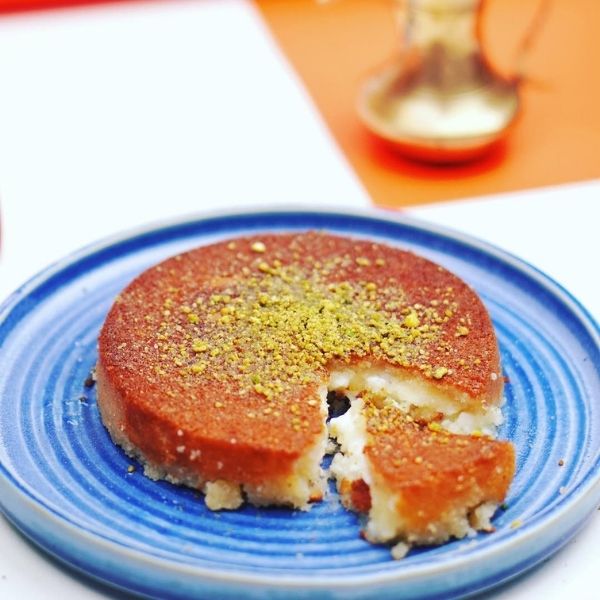
Kunafa — shredded kataifi strands, soft cheese filling, served warm
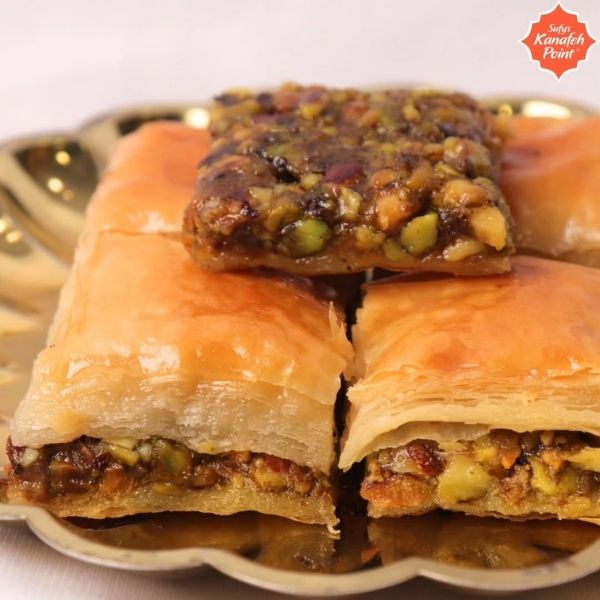
Baklava — stacked phyllo sheets, chopped nuts, served cool
Two golden, syrup-soaked, nut-topped desserts sit side by side in every Middle Eastern sweet shop, and half the people ordering cannot tell you which is which. Kunafa and baklava get confused constantly — and the confusion is fair, because they share a syrup, a nut garnish and a general shade of gold.
They are not the same thing. They are not even made from the same dough. Here is the difference, in the order it actually matters.
The short answer
Kunafa is made from shredded dough and served warm. Fine strands of kataifi dough are packed around a soft filling — usually cheese or cream — baked until crisp, then soaked in syrup and eaten hot, while the cheese still pulls.
Baklava is made from sheet dough and served at room temperature. Paper-thin phyllo sheets are stacked with butter and chopped nuts, baked into crisp layers, then soaked in syrup and left to set. It is cut into diamonds or rolls and eaten cold or ambient, days after baking.
Same family. Completely different eating experience.
1. The dough is the real difference
This is where everything else comes from.
Kataifi (also spelled kadaif or kadayif, and sold in India as kunafa dough) is phyllo that has been extruded into hair-thin strands rather than rolled into sheets. It looks like a nest of pale noodles. Those strands trap butter and air, which is why kunafa goes crunchy and stays crunchy around a wet filling.
Phyllo is the same basic dough left in sheets so thin you can read through them. Stacked forty or fifty layers deep with butter between, it bakes into brittle, flaky sheets — the shatter you get when a fork goes through baklava.
One dough, two shapes, two textures. Everything downstream follows from that.
2. The filling
Kunafa is filled with something soft and usually dairy. The classic is Nabulsi cheese — mild, stretchy, slightly salty. Cream (ashta) is the other traditional option. Modern versions use Nutella, Biscoff, chocolate ganache or pistachio cream. The filling is the point; the kataifi is the crunchy shell around it.
Baklava is filled with nuts. Pistachio, walnut, cashew or hazelnut, chopped and scattered between the phyllo layers. There is no soft centre — the whole thing is crisp all the way through. The nut you use largely defines the baklava: pistachio for the Turkish and Levantine styles, walnut for the Greek, cashew for many Indian versions.
3. Temperature — and why it decides how you serve it
This is the practical difference that catches people out.
Kunafa must be warm. Cold kunafa is a sad thing: the cheese firms up, the crunch dulls, the syrup sits heavy. Reheat it — a hot oven or an air fryer for a few minutes — and it comes back to life. If you are ordering kunafa for a party, plan a reheat, not a fridge.
Baklava must not be warm. It needs hours after the syrup goes on to settle. Hot baklava is soggy; rested baklava is crisp and clean. It keeps beautifully for days at room temperature, which is exactly why it travels well and why it is the default gifting sweet.
That single fact is why baklava dominates gift boxes and kunafa dominates dessert menus.
4. Shelf life and shipping
Baklava is a keeper. Sealed and kept cool and dry, it holds its texture for well over a week, and it does not need refrigeration. You can courier it.
Kunafa is a today dessert. It is best on the day it is made, acceptable the next day with a reheat, and past its best after that. This is not a flaw — it is what a fresh, cheese-filled, freshly-crisped dessert is.
If you are sending sweets to someone in another city, send baklava. If you are eating tonight, order kunafa.
5. The names, and why they are so confusing
Kunafa turns up as kanafeh, knafeh, kunafah, kunefe and konafa depending on which country you are reading about. The dough itself gets called kataifi, kadaif, kadayif or simply kunafa dough. They all refer to the same shredded phyllo.
Baklava is more stable as a word, but the styles vary wildly — Turkish baklava tends to be drier and heavier on pistachio, Greek is sweeter and often uses honey and walnut, and Levantine versions sit somewhere between.
Neither dessert belongs to one country. Both are shared across Turkey, the Levant, Egypt, Greece and the Balkans, and every version has a legitimate claim.
6. Which one should you order?
A quick way to decide:
- Want a hot dessert right now, to eat with a spoon? Kunafa.
- Want something to keep on the counter and pick at all week? Baklava.
- Gifting to someone in another city? Baklava.
- Feeding people who have never had Middle Eastern sweets? Nutella or Biscoff kunafa — familiar flavours, unfamiliar texture.
- Feeding someone who already knows the cuisine? Nabulsi cheese kunafa or a classic pistachio baklava. Both are judged on execution, not novelty.
- Do not want to choose? A mixed box. Most people end up preferring the one they expected to like less.
7. What about the viral chocolate bar?
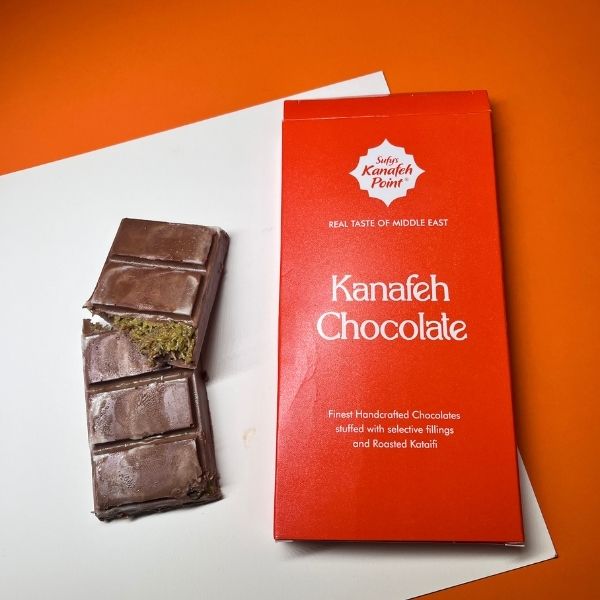
The pistachio-and-kataifi chocolate bar that took over the internet is neither kunafa nor baklava — it borrows the crunchy kataifi from kunafa and puts it inside a chocolate shell with pistachio cream. It is a third thing, and it works because kataifi crunch survives being surrounded by something soft. That is the same property that makes kunafa work in the first place. You can order those here.
Making either one at home
Baklava is patient work but forgiving: the skill is in the butter and in the temperature contrast between pastry and syrup — hot pastry with cool syrup, or the other way round, never both hot.
Kunafa is faster but less forgiving: the kataifi has to be separated properly, coated evenly in butter or ghee, and packed neither too loose nor too tight. Our kunafa recipe guide walks through the whole process, including the mistakes that make the difference between crisp and chewy.
If you are making it yourself, the dough matters more than anything else you do. Fresh kataifi separates into clean strands; old, over-frozen dough breaks into stubs and never crisps properly. We manufacture our own kataifi in Mumbai and supply it fresh — see retail packs, wholesale supply, how pricing works, or our Thane delivery route.
Or just order both
Honestly, the fastest way to settle the kunafa-versus-baklava question is to eat them next to each other. We make both, fresh, in Mumbai.
Browse kanafeh · Browse baklava · How online ordering works
Questions? Call +91 89289 05912 or email Sales@sufyskanafehpoint.in. If you would rather just find some nearby, see where to find kunafa near you in Mumbai.